AI will help build the energy it needs.
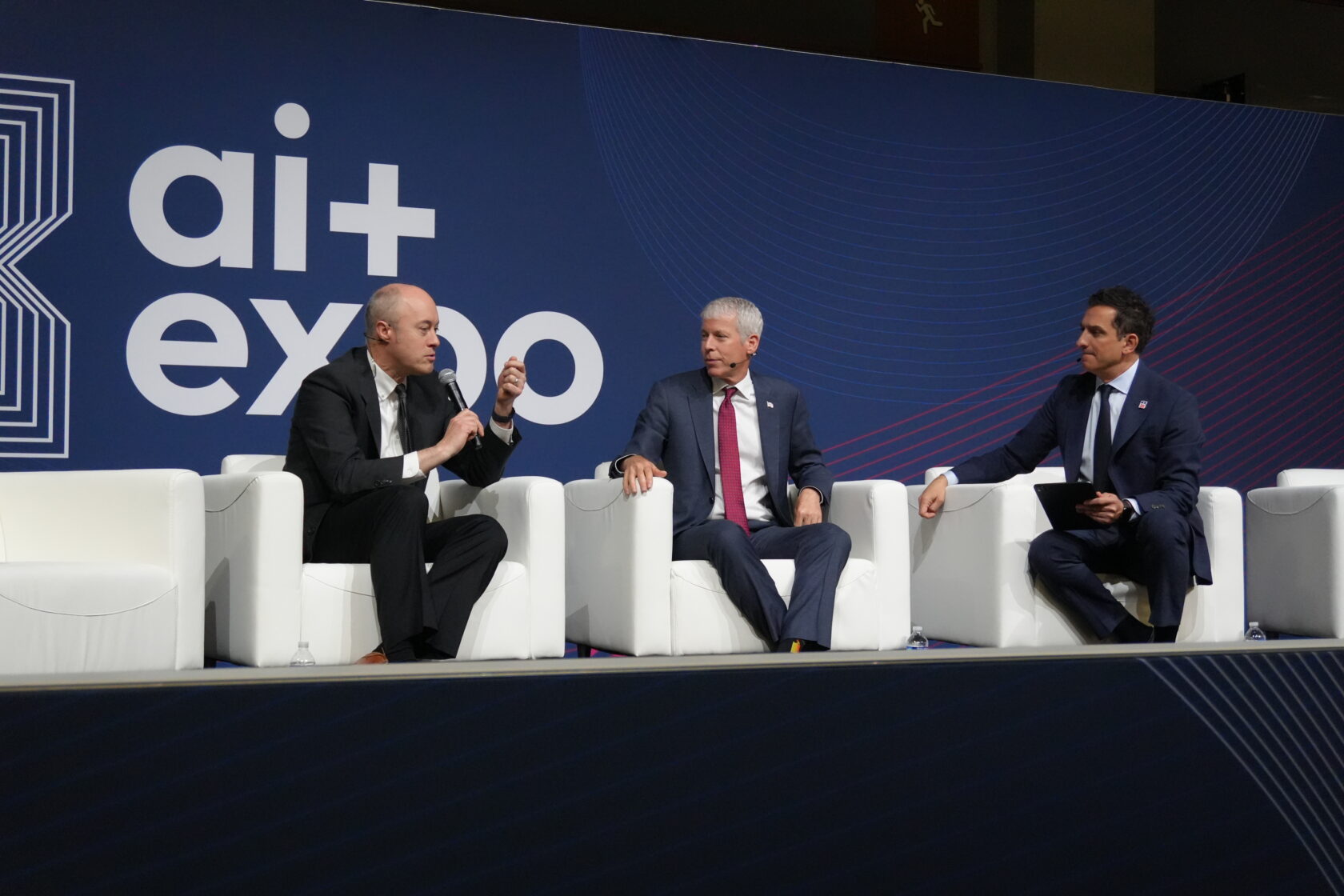
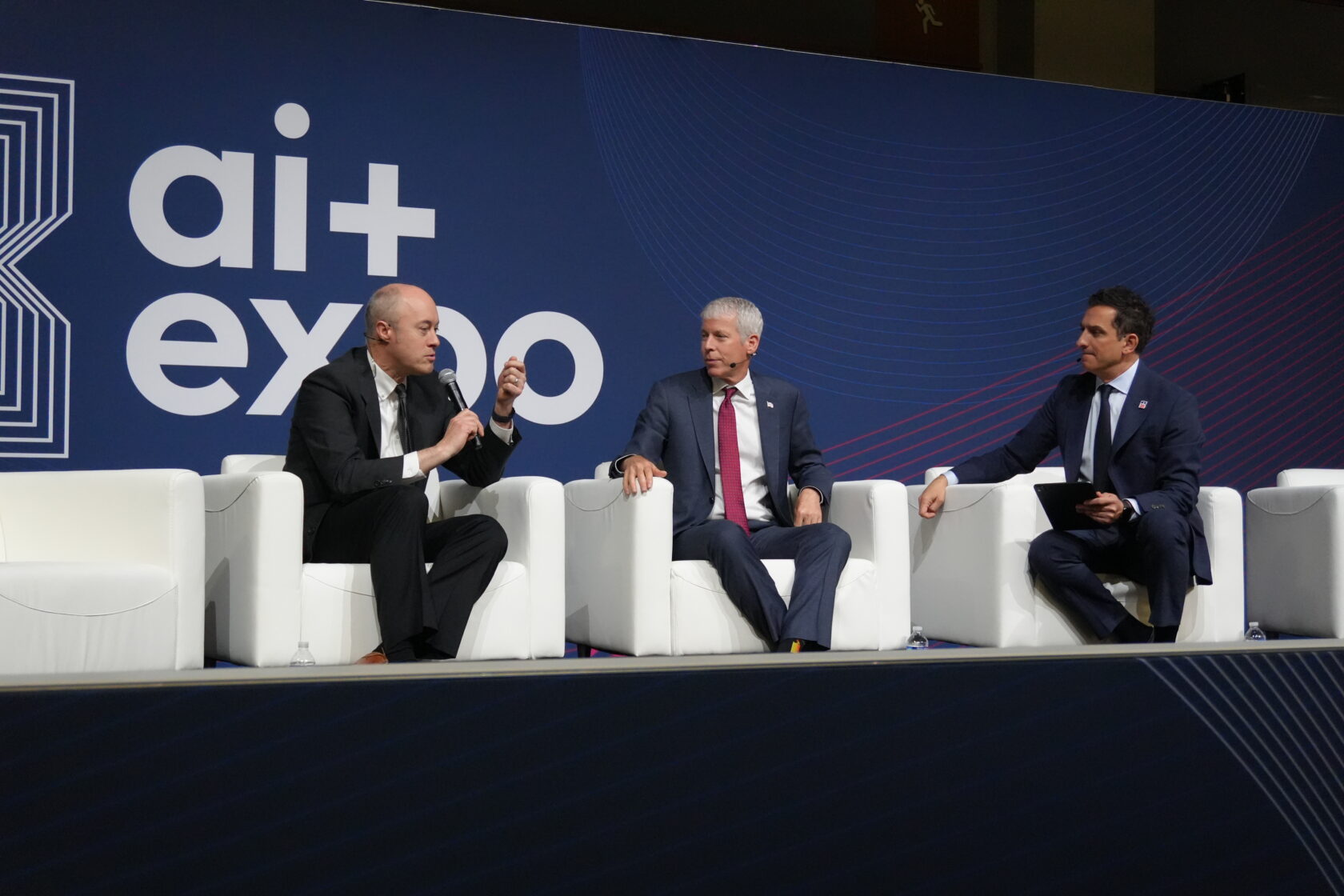
That’s the case U.S. Energy Secretary Chris Wright and NVIDIA Vice President of Hyperscale and High-Performance Computing Ian Buck made Thursday morning at the SCSP AI+ Expo. The 30-minute fireside chat, moderated by SCSP president Ylli Bajraktari, was called “Powering the Next American Century.”
Their argument: American leadership in AI runs through American leadership in energy.
“Energy is life,” Wright said. “The more energy you have, the more affordable energy you have, the more opportunities you have in your society.”
The Genesis Mission — the U.S. Department of Energy (DOE)’s effort to apply AI to scientific discovery — is where that case meets execution. NVIDIA is among the DOE partners on the mission, building on what Buck called two decades of NVIDIA building supercomputers with the national labs.
“NVIDIA is 100% committed and invested in Genesis,” Buck said. “I’ve never seen more excitement across the lab and industry.”
The session was one of several SCSP panels this week with NVIDIA leaders on stage: Cofounder and NVIDIA Fellow Chris Malachowsky will lead a panel on the AI+ Careers Workforce Task Force; Rev Lebaredian will speak on physical AI and simulation; Dion Harris will discuss AI-accelerated American science and AI infrastructure for Africa; and John Josephakis will join a session on U.S. quantum leadership.
The DOE Partnership
The DOE brings 17 national labs, the scientists, the national problems and the data. NVIDIA brings the full stack — not just chips, Buck said, but algorithms, methods and 20 years of partnership with the labs.
The work is happening at scale. NVIDIA and the DOE are building two AI supercomputers together at Argonne National Laboratory. The first, Equinox, is being stood up now with 10,000 NVIDIA Grace Blackwell GPUs — what Buck called “the same GPU, the same software being used to train and build AI that we’re all enjoying today.” The second, Solstice, will use 100,000 GPUs with NVIDIA Vera Rubin.
“To put that 100,000 in perspective on the next-generation GPU, which is dedicated to science, it’s 5,000 exaflops,” Buck said. “That’s a big number that actually is five times larger than the entire TOP500 supercomputer list combined.”
“We’re creating all the same technology, all the same hardware, all the same software building blocks used by all the major AI labs around the world,” Buck said, “for all of world science to go get access to.”
What that looks like in practice: Buck described an open source NVIDIA AI model trained on 1.5 million physics papers, then fine-tuned on 100,000 papers specifically about fusion. The result is a specialized AI agent DOE researchers can interrogate to advance their work faster.
Energy and the Pace of Building
Over the last 20 years, Wright said, the U.S. has tripled oil production and doubled natural gas production — but barely grown electricity production. That’s a problem because, as Wright put it, the most important source of energy for AI is electricity.
His department is leaning back into all three pillars of the U.S. grid: natural gas, nuclear and coal.
On nuclear, Wright pointed to small modular reactors as a near-term lever — three small modular reactors (SMRs) will go critical by July 4 of this year, he said, with both new large reactors and additional SMRs to follow.
On fusion, his department has stood up a strategic fusion office, and the lab and university programs are being, in his words, “hypercharged” by the computing power and insights AI now provides.
“We have to fix this bureaucratic and complex electricity grid so that it can grow fast, so that it can grow like our primary energy production and it can keep up with AI,” Wright said. “If we don’t do that, we’re going to slow down AI.”
NVIDIA founder and CEO Jensen Huang has described AI as a five-layer cake: energy, chips, infrastructure, models and applications. Wright’s department covers the bottom layer.
Buck took up the next layer. Asked about the intersection of energy and AI, he pointed to per-watt efficiency gains in NVIDIA chips with each generation.
“We went from the Hopper generation to Blackwell,” Buck said. “We increased performance by 30x. We actually increased performance per watt by 25 times.”
Wright returned to the grid. AI, he said, can break the bottleneck of grid interconnection studies that today take years.
“With AI, we’re going to take something that was years long and make it weeks or hours,” Wright said.
What Success Looks Like
Asked what success looks like 12 months in, Wright pointed to fusion, materials and grid interconnection — concrete deliverables.
“We will have deliverables that we’re going to point to — we couldn’t do that before, and now we can,” Wright said. “That’s the goal of Genesis: drive discovery and bring the benefits to humans.”
There’s growing public concern that AI and data centers will drive up electricity costs, he noted. The reality, Wright said, runs the other way: “Building more electrical generation, building data centers, are actually the mechanism to lower the cost of electricity in our country and make our grid stronger.”
AI and energy are both key to human progress.
“AI doesn’t love, it doesn’t have passion,” Wright said. “It’s just going to make humans more powerful and better at pursuing whatever your passions are. It’s a thing that supercharges humans — it does not replace you.”